




A water pump is an important part of your vehicle’s cooling system. It keeps coolant flowing through the engine and radiator to prevent overheating.
When the water pump starts to fail, it can quickly lead to expensive engine damage if ignored. Knowing the warning signs can help you fix the problem before it gets worse.
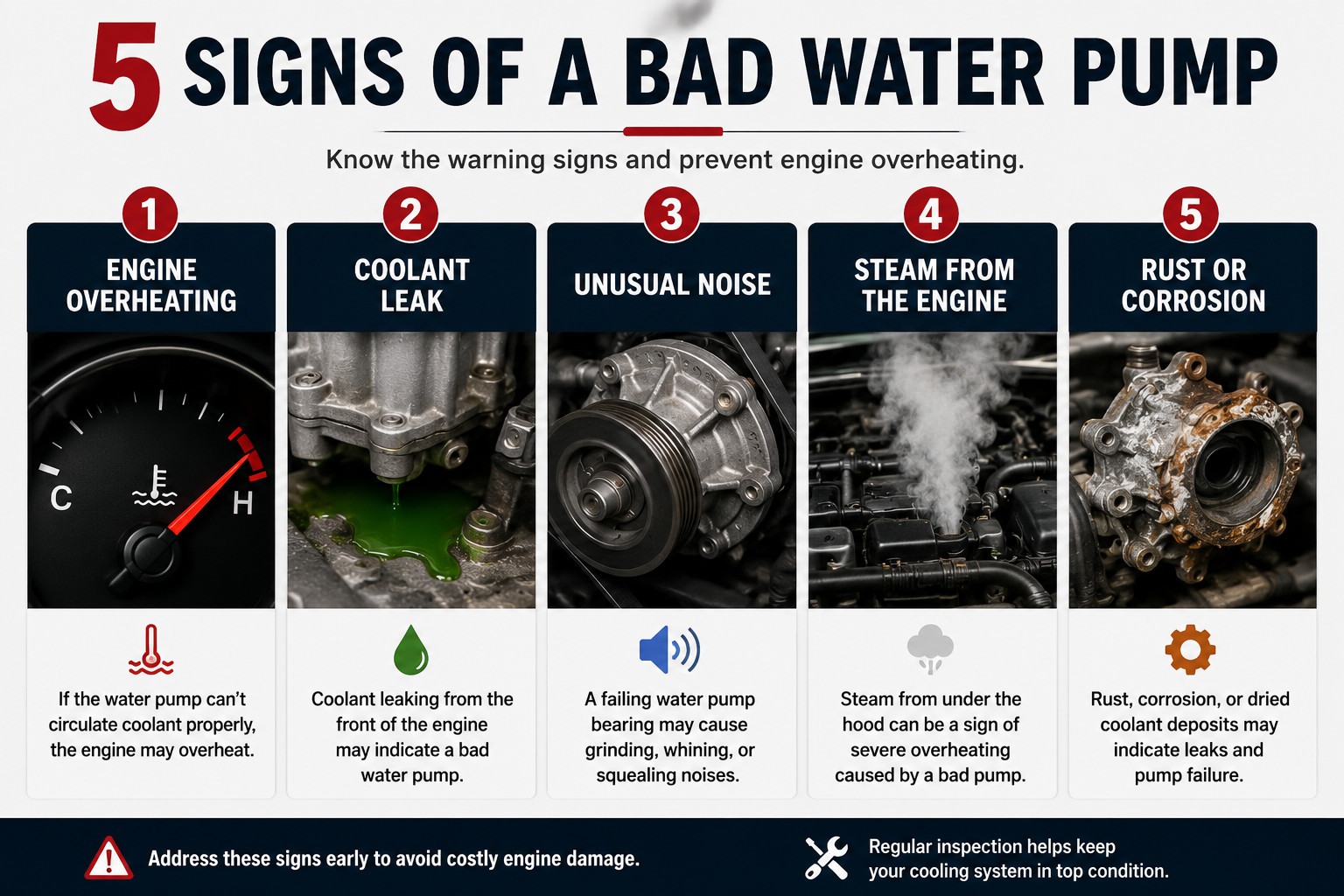
1. Engine Overheating
One of the most common signs of a bad water pump is an overheating engine.
If the pump can’t circulate coolant properly, engine temperature will rise. Never ignore an overheating warning, as it can lead to serious engine damage.
2. Coolant Leak
Coolant leaking from the front of the engine may indicate a worn water pump seal or gasket.
Look for green, pink, orange, or blue coolant under your vehicle after it has been parked.
3. Grinding or Whining Noise
A failing water pump bearing may produce a grinding, whining, or squealing sound while the engine is running.
If the noise gets louder over time, the pump may need to be replaced.
4. Steam from the Engine
If coolant stops circulating, the engine can become extremely hot and produce steam from under the hood.
Pull over safely and allow the engine to cool before checking the cooling system.
5. Rust or Corrosion
Inspect the water pump for rust, corrosion, or dried coolant deposits.
These signs often indicate long-term coolant leaks or poor coolant maintenance.
How to Check a Water Pump
If you suspect a failing water pump, you can:
- Check the coolant level.
- Inspect for leaks around the pump.
- Listen for unusual bearing noise.
- Look for signs of corrosion.
- Perform a cooling system pressure test.
A pressure tester can help locate leaks and confirm whether the cooling system is holding pressure properly.
Can You Drive with a Bad Water Pump?
Driving with a faulty water pump is not recommended.
A failed pump can cause severe overheating, leading to damage to the head gasket, cylinder head, or even the engine block.
Final Thoughts
A bad water pump often gives warning signs before it completely fails. If you notice overheating, coolant leaks, unusual noises, or steam from the engine, inspect the cooling system as soon as possible.
Early diagnosis can help prevent costly repairs and keep your vehicle running safely.
Related Tools
- Cooling System Pressure Tester
- Radiator Pressure Test Kit
Post time: Jun-29-2026