




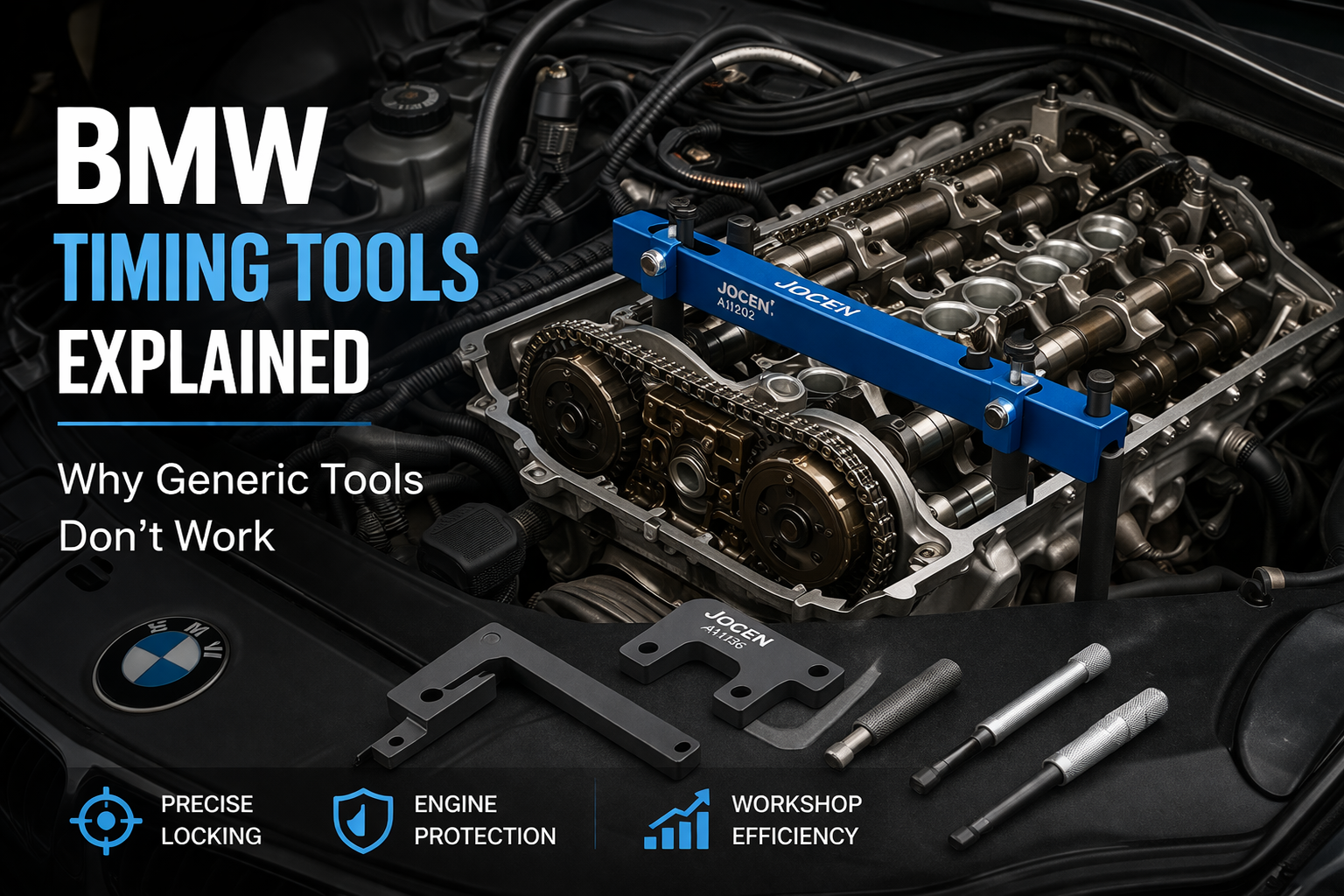
Modern BMW engines are known for their precision engineering. While this improves performance and efficiency, it also means that maintenance — especially engine timing — requires a much higher level of accuracy.
One of the most common mistakes in workshops is attempting to use universal timing tools on BMW engines. In many cases, this leads to incorrect timing, engine damage, or repeated repair work.
In this article, we’ll explain why BMW timing systems require dedicated tools and what mechanics should know before starting the job.
Why BMW Engine Timing Is So Precise
BMW engines, especially turbocharged models, rely on extremely tight tolerances. Even a small deviation in timing can lead to:
- Loss of engine performance
- Increased fuel consumption
- Engine misfires
- Potential internal damage
Unlike older engines, modern BMW timing systems often involve multiple locking points and synchronization steps.
The Problem with Universal Timing Tools
Universal timing tools are designed to work across multiple engines. While they may seem convenient, they often lack the precision required for BMW engines.
Common issues include:
1. Improper Fit
Generic tools may not align perfectly with camshafts or crankshaft positions.
2. Inaccurate Locking
Without exact locking positions, even slight movement can affect timing accuracy.
3. Increased Risk of Errors
Using non-specific tools increases the likelihood of incorrect installation and costly rework.
Why Dedicated BMW Timing Tools Are Necessary
Dedicated timing tools are designed specifically for certain BMW engine models. They provide:
- Exact fit for camshaft and crankshaft locking
- Stable positioning during installation
- Improved accuracy and repeatability
- Reduced risk of engine damage
For professional workshops, these tools are essential for ensuring reliable results.
Common Situations That Require Timing Tools
Mechanics typically need timing tools when:
- Replacing timing chains or belts
- Repairing cylinder heads
- Fixing engine misfires related to timing
- Performing engine rebuilds
In these cases, precision is critical — and using the correct tools makes all the difference.
Choosing the Right Timing Tool Kit
When selecting timing tools for BMW engines, consider:
- Engine model compatibility
- Material strength and durability
- Completeness of the kit
- Ease of use in workshop conditions
Professional-grade tool kits are designed to handle repeated use and maintain accuracy over time.
Final Thoughts
BMW engines demand precision, and engine timing is not an area where compromises should be made. While universal tools may seem like a cost-saving option, they often lead to bigger problems in the long run.
Using dedicated timing tools ensures accurate results, protects the engine, and improves overall repair efficiency — making them a worthwhile investment for any professional workshop.
Post time: Apr-06-2026