




Brake calipers are one of the most important components in a vehicle braking system. During brake service and maintenance, improper repair methods can easily damage the caliper, leading to poor braking performance, uneven pad wear, fluid leaks, or expensive replacement costs.
For workshops and technicians, understanding common brake repair mistakes is essential for safe and efficient repairs.
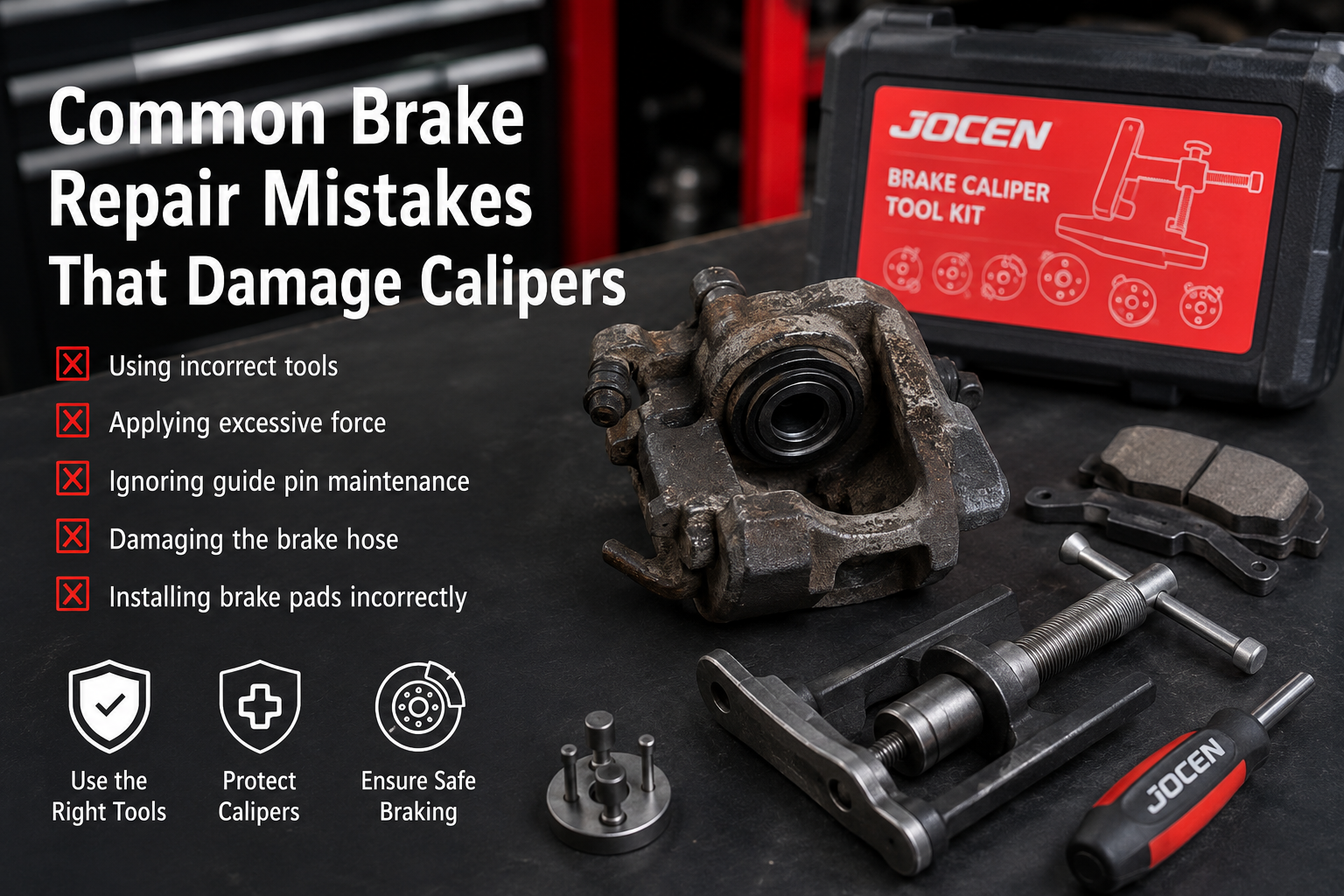
Why Brake Calipers Are Easily Damaged
Modern brake calipers are designed with precise tolerances and moving components. During brake repairs, excessive force or incorrect tools can damage internal seals, pistons, guide pins, or mounting surfaces.
In many cases, caliper damage happens during routine brake pad replacement rather than major repairs.
Proper repair procedures and suitable brake tools can help avoid unnecessary problems.
Mistake 1: Using Incorrect Tools to Compress Pistons
One of the most common mistakes is forcing the caliper piston back using pliers, screwdrivers, or other improper tools.
This may cause:
- Damaged piston surfaces
- Torn seals
- Uneven piston movement
- Brake fluid leakage
Modern vehicles, especially those with electronic parking brakes, often require dedicated brake piston rewind tools.
Using the correct brake caliper wind back tool helps apply even pressure and reduces the risk of internal damage.
Mistake 2: Applying Excessive Force
Brake components should never be forced during installation or removal.
Common examples include:
- Hammering stuck calipers
- Over-tightening mounting bolts
- Forcing seized guide pins
Excessive force may crack caliper housings or damage mounting threads.
If components are seized, technicians should inspect for corrosion, contamination, or lack of lubrication before continuing.
Mistake 3: Ignoring Guide Pin Maintenance
Brake caliper guide pins allow smooth caliper movement during braking.
If guide pins are dirty, dry, or corroded, the caliper may not move correctly. This can cause:
- Uneven brake pad wear
- Brake dragging
- Overheating
- Reduced braking efficiency
During brake service, guide pins should always be:
- Cleaned
- Inspected
- Properly lubricated
Neglecting this step is a common cause of caliper problems.
Mistake 4: Damaging the Brake Hose
During brake repairs, some technicians allow the caliper to hang by the brake hose after removal.
This places unnecessary stress on the hose and fittings.
Over time, this may cause:
- Internal hose damage
- Brake fluid leaks
- Reduced hydraulic pressure
The caliper should always be supported properly during service.
Mistake 5: Installing Brake Pads Incorrectly
Improper brake pad installation can create uneven pressure inside the caliper.
Common installation mistakes include:
- Incorrect pad positioning
- Missing anti-rattle clips
- Dirty contact surfaces
- Lack of brake lubricant in proper areas
These problems can lead to abnormal wear and poor caliper movement.
Mistake 6: Failing to Clean Corrosion
Rust and corrosion are major causes of brake caliper problems, especially in regions with moisture, road salt, or harsh weather.
Corrosion around:
- Guide pin bores
- Pad contact areas
- Caliper brackets
can prevent smooth operation.
Cleaning these areas during brake service is essential for proper caliper performance.
Why Proper Brake Tools Matter
Using dedicated brake repair tools can improve repair quality and reduce the risk of damage.
Professional workshops commonly use:
- Brake caliper wind back tools
- Brake piston compressors
- Brake bleeder kits
- Guide pin service tools
Proper tools help technicians complete repairs more safely and efficiently.
Brake Repair Demand Continues to Grow
As vehicle ownership continues to increase worldwide, brake maintenance remains one of the most common workshop services.
For distributors and automotive tool suppliers, brake repair tools remain a stable and high-demand product category.
Workshops are increasingly looking for:
- Reliable brake tools
- Better repair efficiency
- Compatibility with modern vehicles
Professional brake service tools continue to play an important role in the automotive aftermarket industry.
Final Thoughts
Brake calipers are critical safety components, and even small repair mistakes can lead to serious braking problems.
Using correct repair methods, maintaining guide pins properly, and choosing suitable brake tools can help prevent unnecessary caliper damage.
For workshops, this means safer repairs and improved efficiency.
For distributors, brake repair tools remain an important product category with long-term market demand.
Post time: May-19-2026