




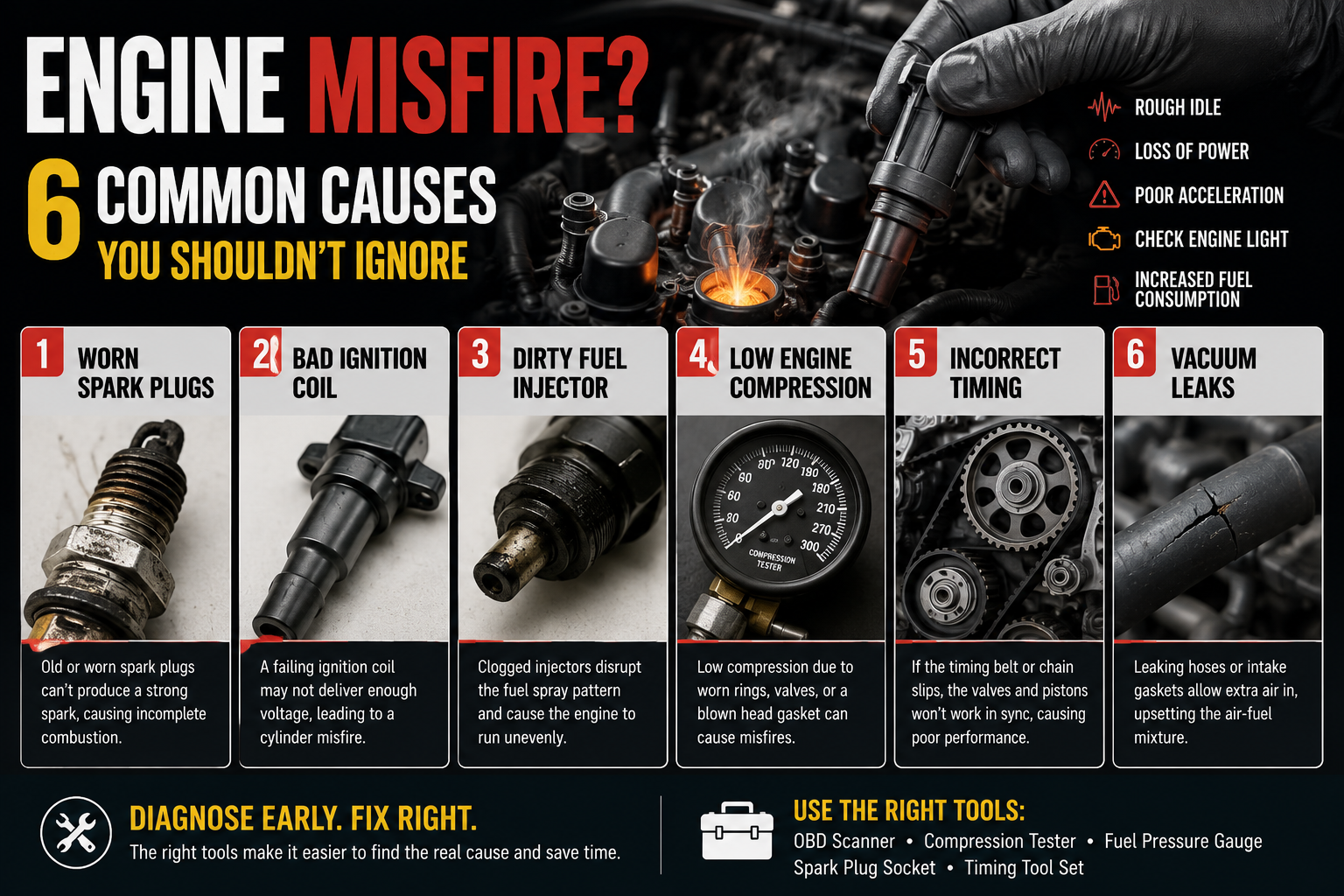
If your engine feels rough, loses power, or the Check Engine Light comes on, you could be dealing with an engine misfire.
A misfire means one or more cylinders aren’t working as they should. Sometimes the fix is simple, like replacing a worn spark plug. In other cases, the problem may be related to the fuel system, ignition system, or even the engine itself.
The sooner you find the cause, the easier and less expensive the repair is likely to be.
Common Signs of an Engine Misfire
Engine misfires don’t always feel the same, but these are some of the most common symptoms:
- Rough idle
- Engine vibration
- Poor acceleration
- Loss of power
- Increased fuel consumption
- Check Engine Light
If you notice one or more of these signs, it’s a good idea to inspect the engine before the problem gets worse.
What Causes an Engine Misfire?
1. Worn Spark Plugs
Spark plugs wear out over time. When the spark becomes weak, the air-fuel mixture may not burn completely.
If your spark plugs haven’t been replaced for a while, they’re a good place to start.
2. Bad Ignition Coil
A faulty ignition coil can’t provide enough voltage for the spark plug.
This often causes rough running, hesitation, or a misfire in one cylinder.
3. Dirty Fuel Injector
Fuel injectors need to deliver the right amount of fuel into each cylinder.
If an injector is clogged or not working properly, the engine may run unevenly or lose power.
4. Low Engine Compression
Healthy compression is essential for normal engine operation.
Worn piston rings, leaking valves, or a damaged head gasket can reduce compression and cause a cylinder to misfire.
A compression test is one of the quickest ways to confirm this problem.
5. Incorrect Engine Timing
If the timing belt or timing chain has slipped, the engine valves won’t open and close at the correct time.
Even a small timing issue can affect combustion and lead to poor engine performance.
6. Vacuum Leak
Cracked vacuum hoses or leaking intake gaskets allow extra air into the engine.
This changes the air-fuel mixture and can cause rough idle or random misfires.
How to Diagnose an Engine Misfire
Start with the simple checks first.
Inspect the spark plugs, ignition coils, and vacuum hoses for obvious signs of wear or damage.
If the Check Engine Light is on, use an OBD scanner to read the fault code.
If the cause isn’t obvious, further testing may be needed, including:
- Engine compression test
- Fuel injector inspection
- Fuel pressure test
- Engine timing inspection
Using the right diagnostic tools can save time and help avoid replacing parts that aren’t actually faulty.
Can You Keep Driving?
A small misfire may not stop your vehicle immediately, but it shouldn’t be ignored.
Driving with a misfiring engine can damage the catalytic converter, reduce fuel efficiency, and eventually lead to more expensive repairs.
If the engine is shaking badly or the Check Engine Light is flashing, it’s best to stop driving and inspect the problem as soon as possible.
Final Thoughts
An engine misfire is usually a warning that something isn’t working properly. In many cases, the cause is easy to identify and repair if caught early.
Regular maintenance, basic inspections, and proper diagnostic tools can help keep your engine running smoothly and prevent small problems from becoming major repairs.
Post time: Jul-15-2026