




The engine is the heart of any vehicle, and the engine timing system serves as its precise metronome. Whether driving a gasoline or diesel engine, smooth operation relies heavily on exact synchronization between the crankshaft and camshafts.
If a timing system fails—whether through belt breakage or chain elongation—it can cause catastrophic engine damage, resulting in costly rebuilds.
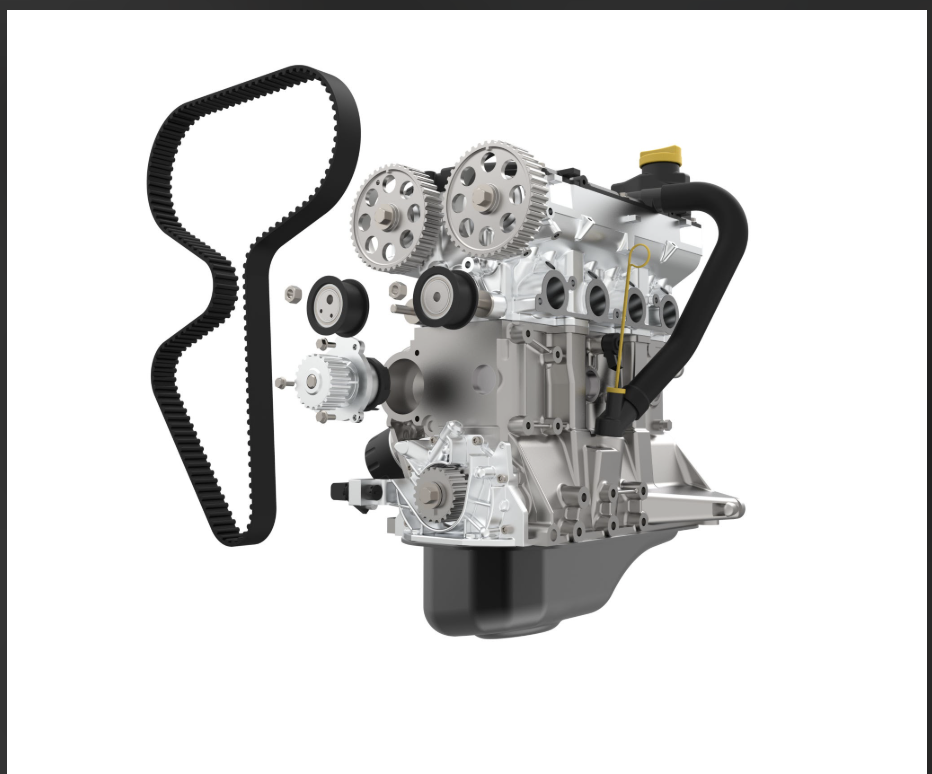
What is an Engine Timing System?
The timing system drives the engine’s valve train, opening and closing intake and exhaust valves at exact intervals during the “Intake – Compression – Power – Exhaust” four-stroke cycle. In many engine configurations, the timing mechanism also powers auxiliary components like the coolant water pump.
Timing Belt vs. Timing Chain: A Direct Comparison
Modern internal combustion engines rely on two primary types of timing mechanisms: Timing Belts and Timing Chains.
| Feature | Timing Belt | Timing Chain |
| Material | Rubber & Synthetic Fibers | High-Strength Alloy Steel |
| Noise Level | Low / Quiet Operation | Moderate |
| Service Life | 60,000 – 100,000 km | Designed for Engine Lifetime |
| Maintenance Need | Periodic Replacement | Tensioner & Stretch Checks |
| Failure Risk | Snap / Tooth Wear | Elongation / Tensioner Wear |
1. Timing Chains
Made of durable steel alloys, timing chains offer excellent strength, reliable transmission, and extended service life. Governed by hydraulic tensioners, they theoretically last the lifetime of the vehicle. However, real-world data shows chain-related issues often arise after 60,000+ km due to:
-
Metal fatigue stretching the chain links.
-
Wear on hydraulic tensioners or plastic chain guides.
2. Timing Belts
Constructed from reinforced rubber compounds, timing belts run quietly with low mechanical resistance. However, rubber inherently degrades over time due to heat, friction, and oil contamination. Most vehicle manufacturers recommend replacing timing belts every 60,000 to 100,000 kilometers.
Consequences of Timing System Failure
When a timing belt snaps or a timing chain slips (jumps teeth), the consequences are immediate:
-
Tooth Slippage (Misalignment): Leads to rough idling, loss of engine power, or failure to start.
-
Belt Snap / Chain Jump: Causes immediate engine stall. In interference engines, the piston collides with open valves, bending valves, damaging cylinder heads, and triggering severe engine damage.
Why Professional Timing Tools Are Essential During Service
Replacing a timing belt or tensioning a timing chain requires absolute precision. A variance of even one single tooth can ruin engine performance or bend valves upon startup.
When performing timing maintenance, mechanics must use specialized Engine Timing Tool Sets (Camshaft & Crankshaft Locking Tools) to freeze the camshafts and crankshaft at Top Dead Center (TDC) before removing the belt or chain.
Key Maintenance Best Practices:
-
Identify the System: Confirm whether the target engine uses a belt or a chain.
-
Adhere to Replacement Intervals: Replace timing belts strictly according to manufacturer specs.
-
Inspect Early: Inspect belt condition and check for oil leaks at 50,000 km intervals.
-
Use OEM-Quality Specialty Tools: Always employ precise camshaft holding tools during timing replacement to guarantee zero timing shift.
Need Professional Engine Timing Tools for Your Shop?
At Jocen Tools, we manufacture premium OEM-grade Engine Timing Tool Kits tailored for BMW, Mercedes-Benz, VAG, Ford, GM, and Asian vehicle series. Ensure fast, safe, and accurate valve timing service for every repair job.
Explore Jocen Engine Timing Tool Catalog
Post time: Jul-31-2026