




Choosing the right socket set is not just about product specifications.
For distributors and importers, it is more about understanding your market and selecting the right combination that actually sells.
Different customers have different needs. A product that works well in one market may not perform the same in another.
This guide will help you make a clearer decision based on real market demand.
1. Know Your Target Customers
Before selecting any product, you need to be clear about who you are selling to.
If your customers are:
- Auto repair workshops
- Tire service centers
- Professional mechanics
They usually look for:
- Durable tools
- Impact resistance
- Complete sets
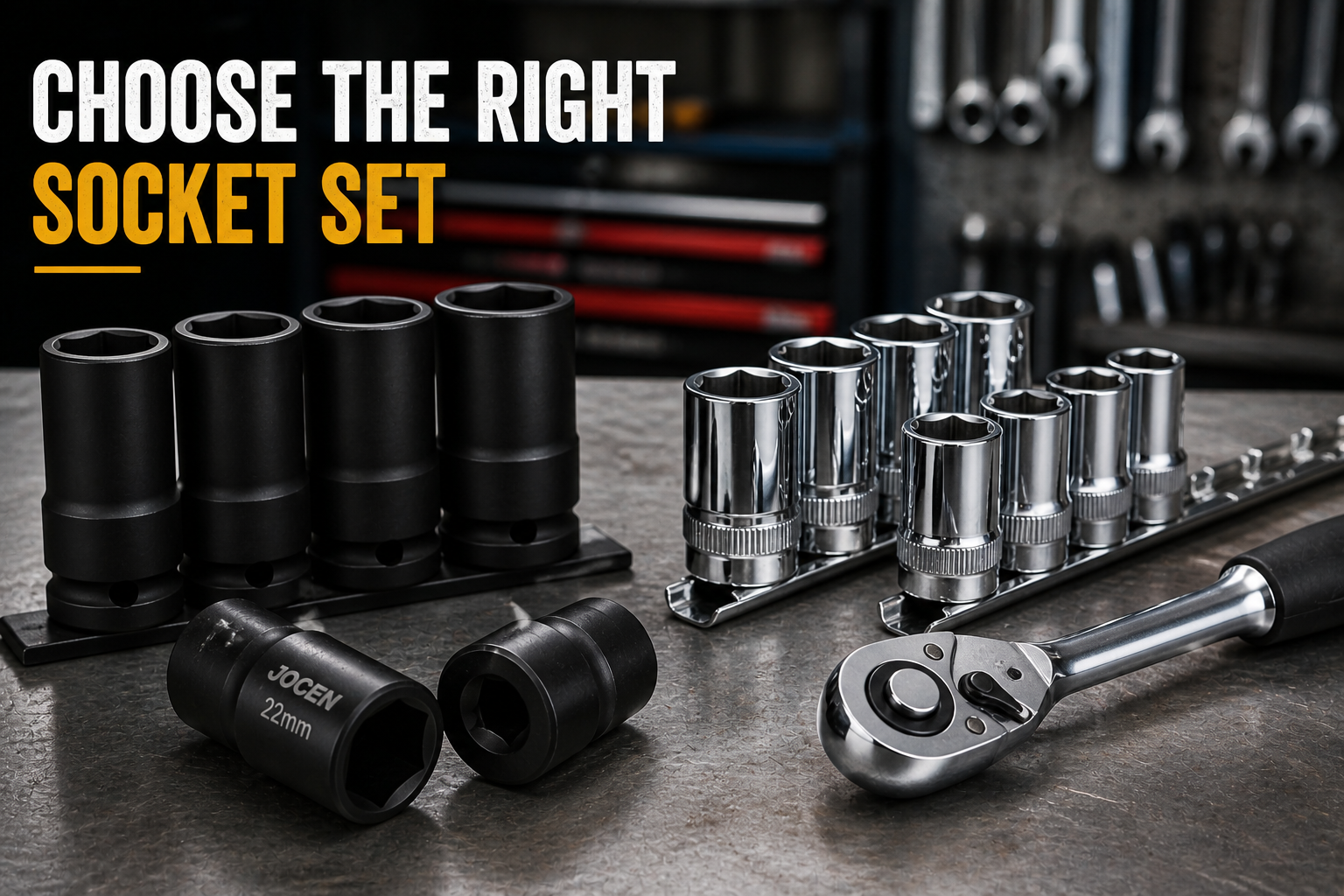
In this case, impact socket sets are the safer choice.
If your customers are:
- DIY users
- Retail buyers
- Light maintenance users
They care more about:
- Price
- Appearance
- Basic functionality
Chrome socket sets are more suitable for this segment.
2. Choose the Right Material
Material directly affects performance and positioning.
- CR-MO sockets are more suitable for heavy-duty and impact use
- CR-V sockets are better for general hand tool applications
For most distributors, a mix of both works best, but the proportion should depend on your market.
3. Decide on Set Configuration
Not all socket sets are equally attractive to buyers.
Common options:
- Small sets (10 to 20 pcs)
- Medium sets (20 to 50 pcs)
- Large professional sets (50 pcs and above)
Market insight:
- Smaller sets sell better in retail and online
- Medium sets are popular with workshops
- Large sets are preferred by professionals and distributors
Offering 2 to 3 different configurations usually gives the best coverage.
4. Consider Drive Size and Standards
Drive size matters more than many people think.
Common sizes:
- 1/4 inch for precision work
- 3/8 inch for general use
- 1/2 inch for heavy-duty applications
A practical product mix often includes:
- 3/8 sets as the main product
- 1/2 sets for professional use
- 1/4 sets as entry-level or add-on products
5. Pay Attention to Packaging
Packaging is not just about protection, it also affects sales.
Good packaging should:
- Be easy to display
- Protect the tools during transport
- Clearly show specifications
Blow-molded cases are widely accepted, especially in mid-range markets.
6. Price Positioning
Price needs to match your target customers.
- Low-end products focus on volume
- Mid-range products offer the best balance
- High-end products require strong branding and quality support
In many markets, mid-range socket sets are the most stable and easiest to scale.
7. Certification and Market Requirements
For some regions, especially Europe, compliance is important.
Buyers may expect:
- Consistent quality standards
- Reliable production
- Clear product specifications
Even if certification is not mandatory, it helps build trust.
8. Product Mix Strategy
Instead of relying on one type of product, it is better to build a balanced range.
A simple structure could be:
- Impact socket sets as core products
- Chrome socket sets as supplementary items
- Different sizes and configurations for flexibility
This allows you to serve more customer groups and increase order value.
For Distributors and Importers
Choosing the right socket set is not only about selling tools.
It also affects your long-term business.
A good product selection can:
- Reduce customer complaints
- Improve repeat orders
- Strengthen your brand in the market
Conclusion
There is no single “best” socket set for all markets.
The right choice depends on your customers, pricing strategy, and product positioning.
Understanding these factors will help you build a product line that sells consistently, not just occasionally.
Post time: May-05-2026