




 Diesel injectors can sometimes become stuck in the cylinder head due to carbon buildup, corrosion, or heat. This is a common problem in high-mileage diesel engines and can make injector removal extremely difficult without the proper tools.
In this guide, we will explain why diesel injectors get stuck and show you the safest way to remove them without damaging the engine.
Why Do Diesel Injectors Get Stuck?
Several factors can cause injectors to seize inside the cylinder head.
Carbon buildup
Over time, carbon deposits accumulate around the injector body and seal it tightly inside the bore.
Heat and corrosion
High engine temperatures combined with moisture can cause corrosion between the injector and cylinder head.
Long service intervals
If injectors remain installed for many years without maintenance, removal becomes more difficult.
This problem is particularly common in modern diesel engines from brands such as Bosch, Delphi, and Denso injection systems.
Tools Required for Removing Stuck Diesel Injectors
Removing seized injectors usually requires specialized tools to avoid damaging the injector or cylinder head.
Common tools include:
-
Diesel injector puller
-
Slide hammer extractor
-
Hydraulic injector remover
-
Injector seat cleaning tool
-
Penetrating oil
A professional diesel injector puller kit is strongly recommended because it allows controlled pulling force and reduces the risk of engine damage.
Step-by-Step Guide to Remove a Stuck Diesel Injector
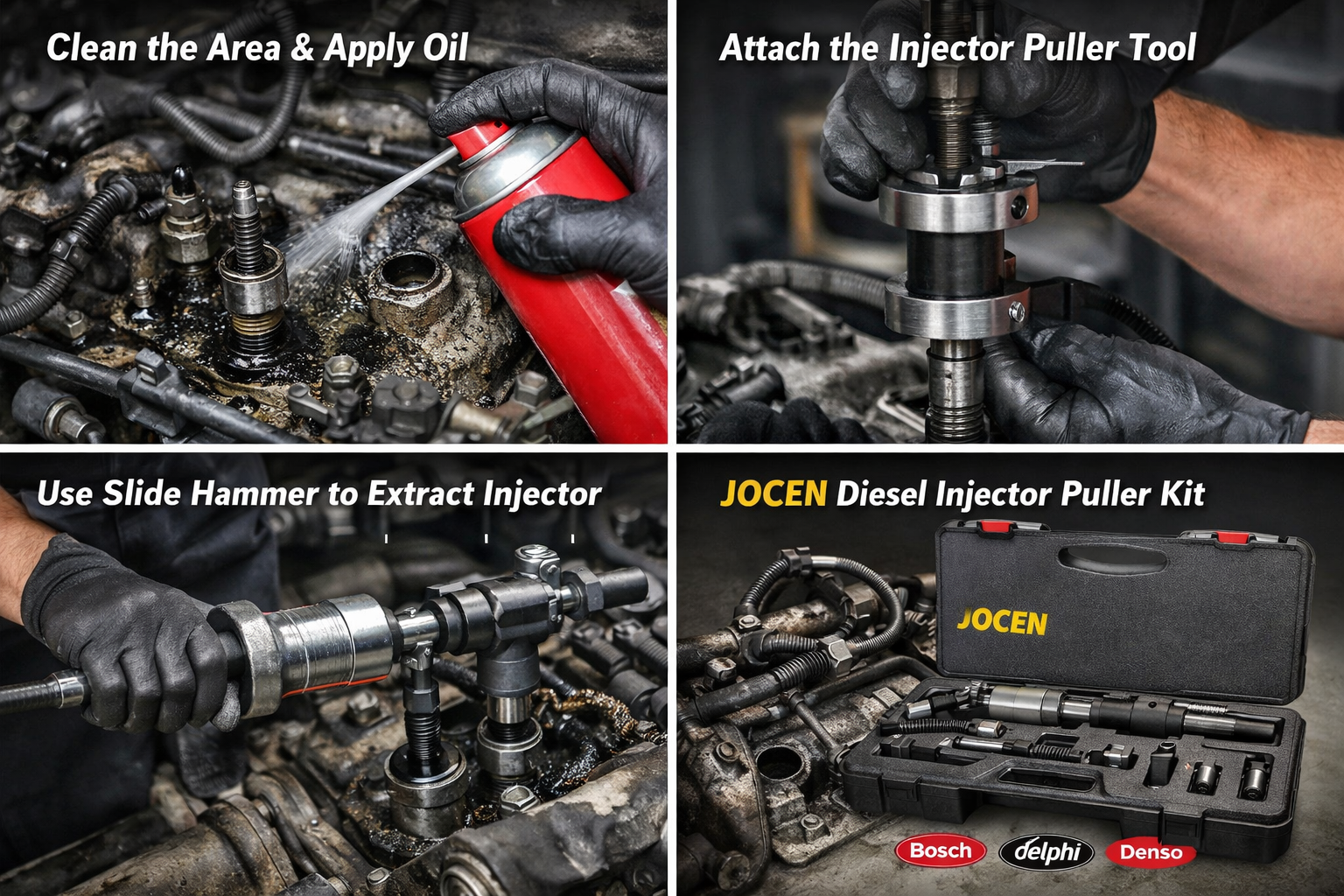
Step 1 – Clean the Area Around the Injector
Before removal, thoroughly clean the injector area to prevent dirt or debris from entering the combustion chamber.
Compressed air or brake cleaner can help remove carbon and dust.
Step 2 – Apply Penetrating Oil
Apply penetrating oil around the injector base and allow it to soak for 10–20 minutes.
This helps loosen carbon deposits and corrosion.
Step 3 – Attach the Injector Puller Tool
Install the appropriate adapter from your diesel injector puller kit and securely attach it to the injector.
Using a slide hammer or puller mechanism will allow steady force to extract the injector.
Step 4 – Apply Controlled Pulling Force
Slowly apply pulling force using the injector removal tool.
Avoid excessive force that could damage the injector or cylinder head.
If the injector does not move, apply additional penetrating oil and repeat the process.
Step 5 – Remove and Inspect the Injector
Once the injector is removed:
-
Inspect the injector for damage
-
Clean the injector seat
-
Replace sealing washers before reinstalling
Using an injector seat cleaning tool is recommended to ensure proper sealing during reinstallation.
Common Mistakes When Removing Diesel Injectors
Using excessive force
Hammering or prying the injector can damage the cylinder head.
Not using the correct tools
Improper tools often break injectors during removal.
Skipping seat cleaning
Failing to clean the injector seat can cause compression leaks.
Professional Tools Make the Job Easier
Removing stuck diesel injectors can be challenging without the right equipment.
Professional workshops typically use dedicated injector removal kits designed for common diesel engines.
At JOCEN Tools, we manufacture diesel injector removal tools widely used by automotive workshops and tool distributors worldwide.
Our injector puller kits are designed for engines equipped with Bosch, Delphi, and Denso injectors.
FAQ
Can I remove a diesel injector without special tools?
It is possible, but not recommended. Specialized injector puller tools significantly reduce the risk of damaging the injector or engine.
What is the best tool for removing stuck diesel injectors?
A diesel injector puller kit with slide hammer or hydraulic assistance is the most effective solution.
Why do diesel injectors seize in the cylinder head?
Carbon buildup, corrosion, and prolonged heat exposure are the most common causes.
Post time: Mar-16-2026