




Changing an oil filter is a routine job in automotive maintenance. However, removing a tight or difficult-to-reach filter can sometimes be frustrating, especially when there is limited working space.
Using the right oil filter wrench makes the job easier and helps reduce the risk of damaging the filter housing.
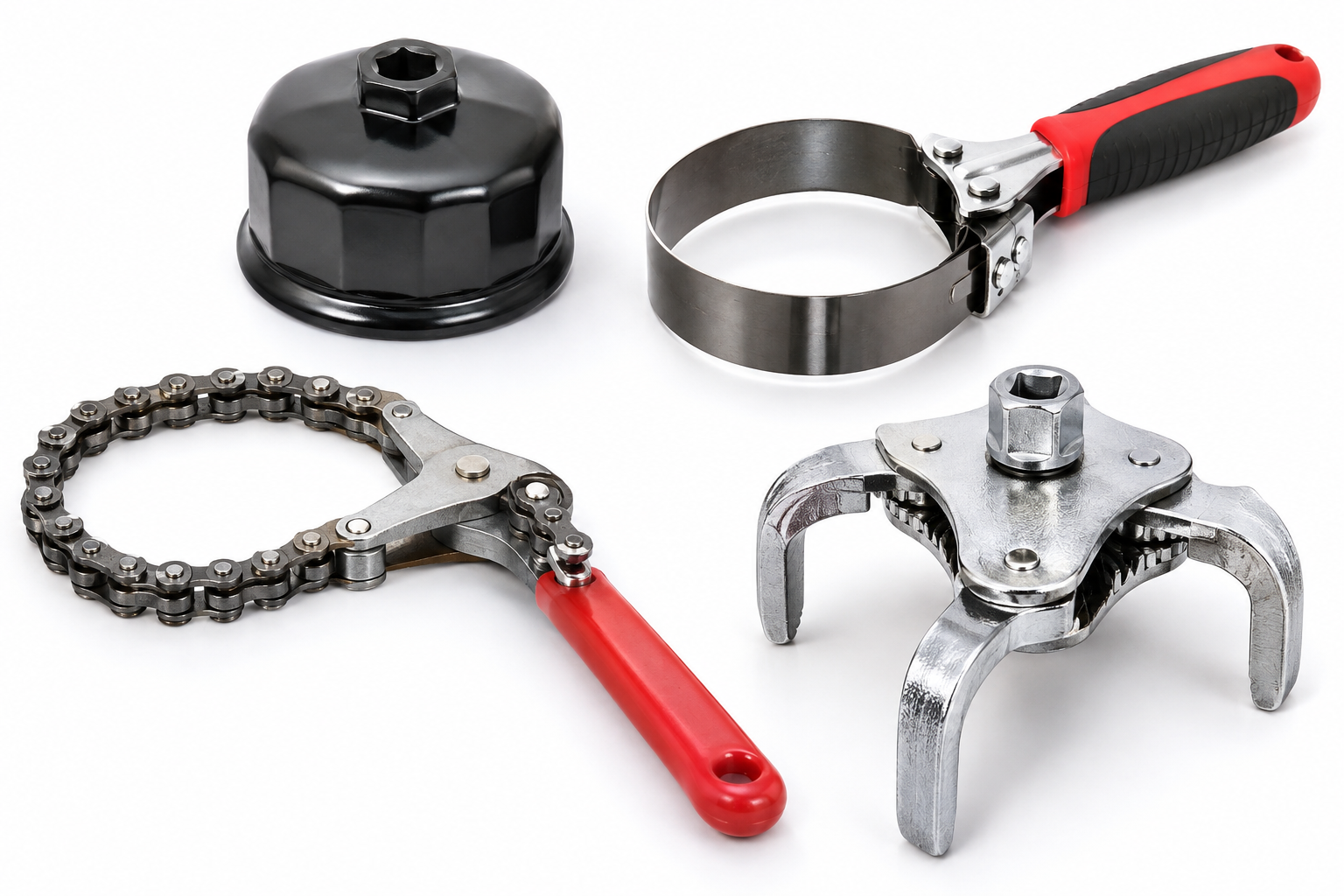
There are several types of oil filter wrenches on the market. Each has its own design and is suited to different working conditions. Here is a practical guide to the main types and what buyers should consider.
1. Why Use an Oil Filter Wrench?
Some oil filters can be removed by hand, but others become difficult to loosen because of heat, dirt, oil residue, or excessive tightening.
An oil filter wrench provides extra grip and leverage, helping technicians remove filters more easily.
It is important to choose a wrench that matches the filter size and design. Using the wrong tool may damage the filter or make removal more difficult.
2. Common Types of Oil Filter Wrenches
Cup-Type Oil Filter Wrench
A cup-type wrench fits over the end of a compatible oil filter. It usually has a specific size and shape, and can be used with a ratchet or socket wrench.
Advantages:
- Fits closely around compatible filters
- Compact design
- Convenient for filters in restricted spaces
- Available in different sizes
Best for: Workshops that regularly service vehicles with known filter sizes.
When selecting this type, check the dimensions and compatibility carefully. A cup that is slightly too large or too small may not grip the filter properly.
Strap-Type Oil Filter Wrench
A strap wrench uses a flexible strap that wraps around the filter body. The strap tightens as force is applied, helping grip filters of different diameters.
Advantages:
- Can work with different filter sizes
- Simple structure
- Useful for filters without a suitable cup size
Best for: General workshop maintenance where technicians work with different filter dimensions.
The strap material and grip design are worth checking, particularly for frequent professional use.
Chain-Type Oil Filter Wrench
A chain-type wrench uses a metal chain to grip the filter. It can provide strong holding force and is useful when a filter is difficult to loosen.
Advantages:
- Strong grip
- Suitable for stubborn filters
- Can accommodate different filter diameters
Best for: Heavy-duty applications and filters that are difficult to remove.
However, technicians should apply force carefully. Excessive pressure can crush or damage the filter housing.
Adjustable Three-Jaw Oil Filter Wrench
This type uses three adjustable jaws to grip the filter. The jaws move as the tool turns, allowing it to work with different filter sizes within its specified range.
Advantages:
- Adjustable gripping range
- Can cover multiple filter sizes
- Useful for workshops handling different vehicles
Best for: General repair shops that want a more flexible tool for different applications.
Before purchasing, check the working diameter range and the drive size required by the tool.
3. How to Choose the Right Oil Filter Wrench
There is no single oil filter wrench that is suitable for every vehicle. Buyers should consider several factors.
Filter size and compatibility
Check the filter diameter and shape before choosing a wrench. Cup-type tools need a close size match, while adjustable designs offer a wider working range.
Working space
Some oil filters are installed in narrow or difficult-to-reach areas. A compact cup wrench or a suitable low-profile design may be more practical.
Grip and material
The wrench should provide stable contact with the filter. For professional workshop use, pay attention to the material, construction, and durability of the gripping parts.
Drive size
Check whether the wrench is designed for a particular ratchet, socket, or other drive tool. This affects how easily it can be used with existing workshop equipment.
4. Common Mistakes When Using an Oil Filter Wrench
Even with the correct tool, a few mistakes can make filter removal more difficult.
- Choosing a cup wrench that does not match the filter size.
- Applying too much force before the wrench is properly seated.
- Using a damaged or worn strap or chain.
- Ignoring the limited working space around the filter.
- Using an unsuitable tool on a plastic filter housing.
For cartridge-style filters, always follow the vehicle manufacturer’s service instructions. Some require a specific housing cap tool and a specified tightening procedure.
5. What Should Distributors Consider When Buying?
For tool distributors and importers, selecting an oil filter wrench range is not only about choosing individual products. It is also about covering the needs of different customers.
A practical product range may include:
- Cup-type wrenches in commonly used sizes
- Adjustable wrenches for different filter diameters
- Strap or chain designs for other working conditions
- Sets with multiple sizes for workshop use
Before placing an order, confirm the size range, material, drive compatibility, packaging, and the vehicle applications your customers commonly service.
A well-selected range can help workshops handle routine oil filter replacement jobs with fewer tool changes.
Final Thoughts
Oil filter wrenches come in different designs, and each type has its own advantages. Cup-type wrenches offer a close fit, strap and chain wrenches provide flexible gripping options, and adjustable three-jaw designs can cover a range of filter sizes.
The right choice depends on filter compatibility, working space, and how frequently the tool will be used.
For automotive tool distributors and importers, offering several types and sizes can help meet the needs of different repair workshops.
Post time: Nov-09-2026