




A blown head gasket is one of the most serious engine problems a vehicle can face. If not repaired quickly, it can lead to overheating, poor performance, and even complete engine failure.
The good news is that there are usually warning signs before major damage occurs. Here are seven common symptoms of a blown head gasket.
What Is a Head Gasket?
The head gasket sits between the engine block and cylinder head. Its job is to seal the combustion chambers and keep coolant and engine oil flowing through separate passages.
When the gasket fails, coolant, oil, and combustion gases can mix, causing a variety of engine problems.
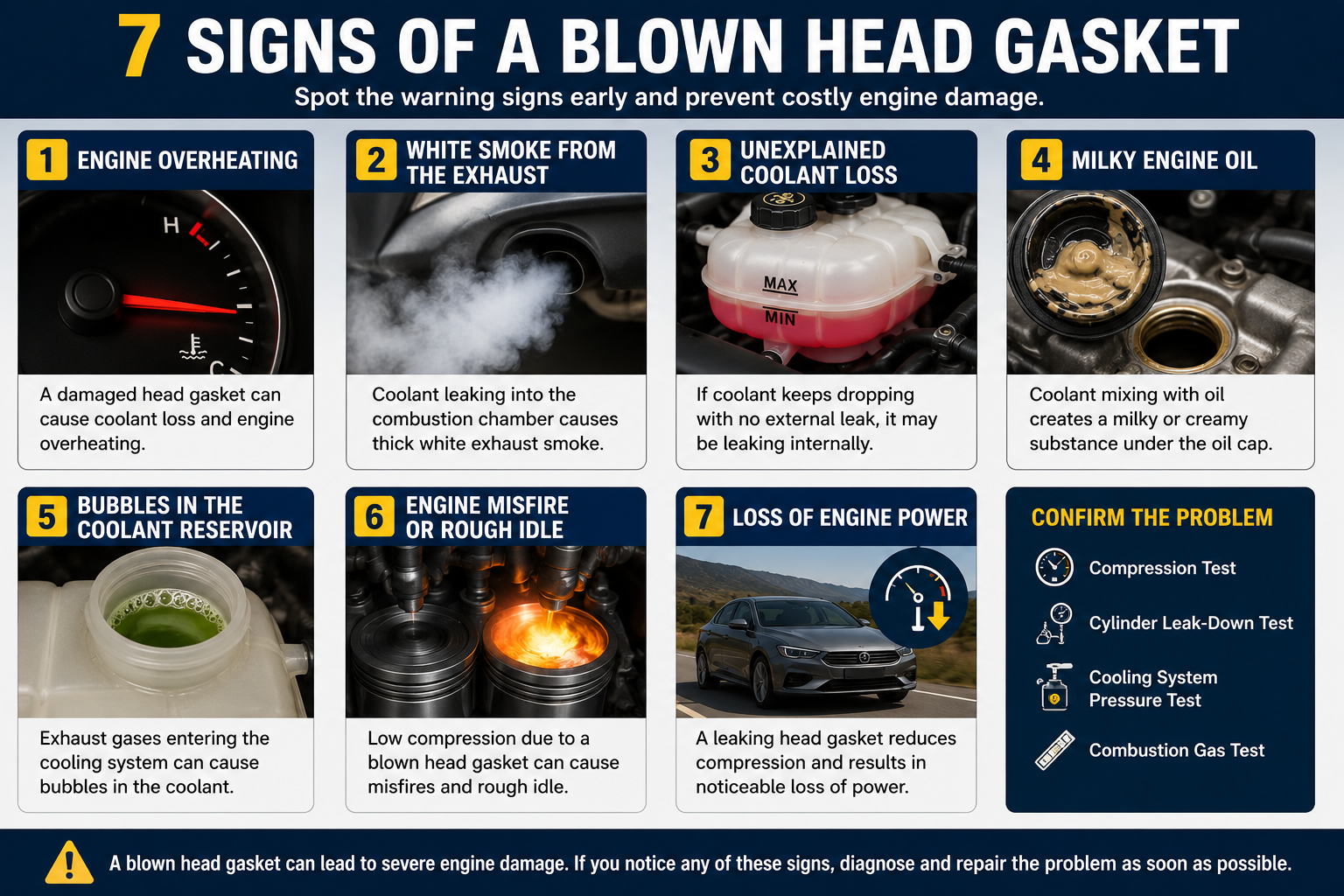
1. Engine Overheating
One of the first signs of a blown head gasket is engine overheating.
A damaged gasket can allow coolant to escape or reduce cooling system efficiency, causing the engine temperature to rise.
If your vehicle frequently runs hot, it’s important to investigate the cause as soon as possible.
2. White Smoke from the Exhaust
Thick white smoke coming from the exhaust is another common symptom.
This happens when coolant leaks into the combustion chamber and burns together with the air-fuel mixture.
A small amount of vapor on cold mornings is normal, but continuous white smoke may indicate a head gasket problem.
3. Unexplained Coolant Loss
If you find yourself topping up coolant regularly without seeing any external leaks, a blown head gasket could be the reason.
Coolant may be leaking internally into the cylinders where it is burned during engine operation.
4. Milky Engine Oil
Check the underside of the oil filler cap or inspect the engine oil.
If the oil looks milky, creamy, or similar to chocolate milk, coolant may be mixing with the oil.
This can reduce lubrication and cause serious engine wear.
5. Bubbles in the Coolant Reservoir
Combustion gases can enter the cooling system through a damaged head gasket.
As a result, you may notice bubbles in the coolant reservoir or radiator while the engine is running.
This is often a strong indicator of gasket failure.
6. Engine Misfire or Rough Idle
A leaking head gasket can affect cylinder compression.
When compression is lost, the engine may misfire, idle roughly, or run unevenly.
These symptoms are especially noticeable during startup.
7. Loss of Engine Power
Poor acceleration and reduced engine performance may also be caused by a blown head gasket.
Low compression prevents the engine from producing its normal power output.
How to Confirm a Blown Head Gasket
Several diagnostic tests can help confirm the problem:
- Compression Test
- Cylinder Leak-Down Test
- Cooling System Pressure Test
- Combustion Gas Test
These tests can help identify internal leaks and determine the condition of the engine.
Can You Drive with a Blown Head Gasket?
Driving with a blown head gasket is not recommended.
Continuing to operate the vehicle can lead to severe overheating, engine damage, and expensive repairs.
If you notice any of the symptoms above, have the vehicle inspected as soon as possible.
Final Thoughts
A blown head gasket can cause major engine problems, but early diagnosis can help prevent costly repairs.
Watch for signs such as overheating, coolant loss, white exhaust smoke, milky oil, and engine misfires. Using the proper diagnostic tools can help identify the issue quickly and accurately.
Post time: Jun-23-2026