




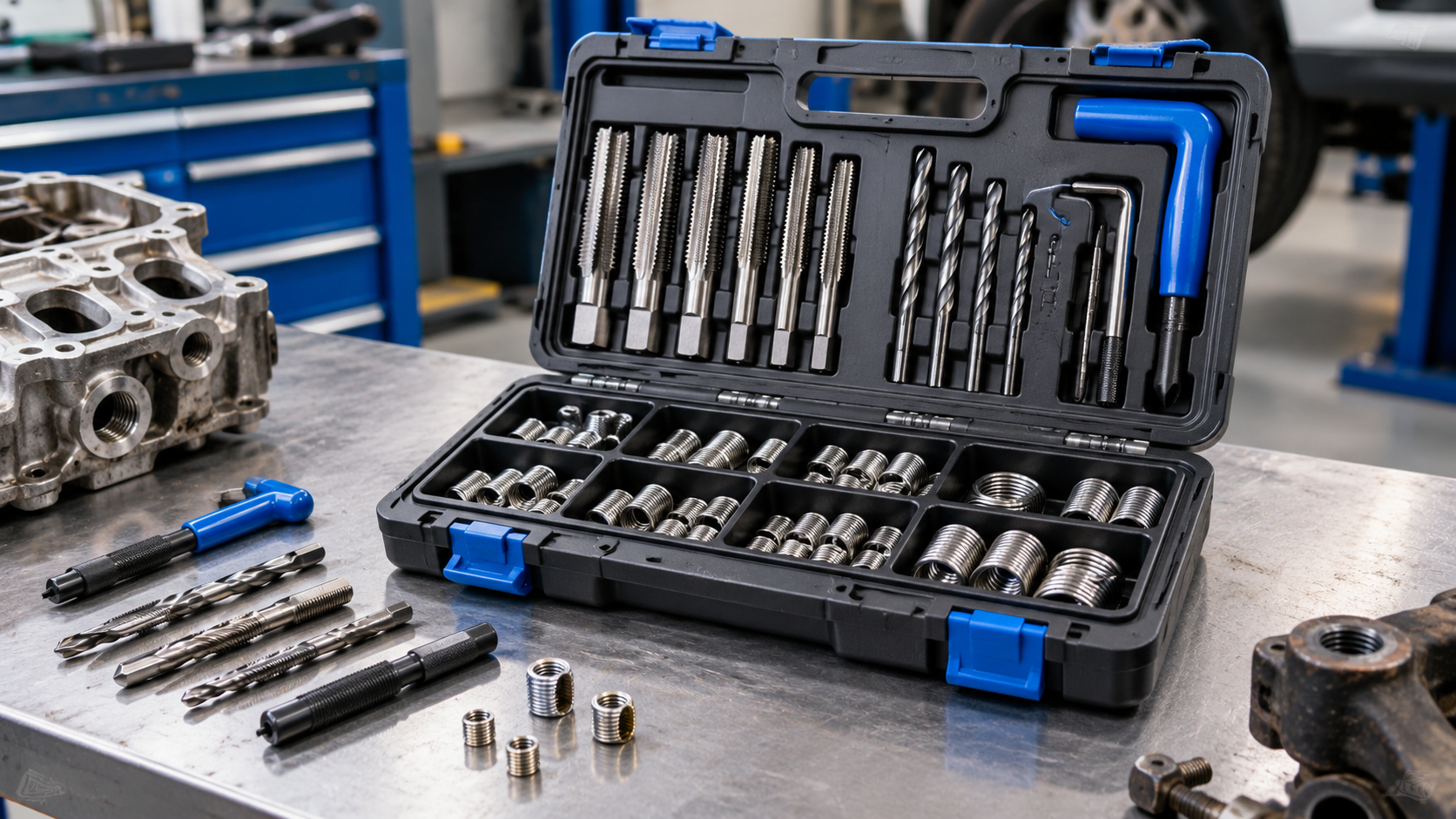
Damaged threads can create problems during automotive repair. A bolt may no longer tighten correctly, or a threaded hole may become damaged after repeated assembly and disassembly.
In some cases, replacing the entire component is unnecessary. A suitable thread repair kit may help restore the damaged thread, depending on the location and condition of the damage.
For automotive workshops, choosing the right kit means looking beyond the number of pieces in the box.
What Is a Thread Repair Kit?
A thread repair kit contains tools and inserts designed to repair certain types of damaged threaded holes.
Depending on the kit, it may include drill bits, taps, installation tools, and thread inserts in different sizes.
These kits can be useful for selected automotive repair applications, including threaded holes in engine components and other metal parts.
However, not every damaged thread can be repaired with an insert. The repair method must suit the component, material, thread size, and manufacturer’s requirements.
When Might a Workshop Need One?
Thread damage can happen for several reasons:
- A bolt is cross-threaded during installation.
- Threads become worn after repeated use.
- A fastener is tightened incorrectly.
- Threads are damaged during component removal.
- Corrosion affects the threaded connection.
A thread repair kit may be suitable when the damage can be repaired safely and the surrounding material remains in acceptable condition.
For critical components, technicians should follow the vehicle manufacturer’s repair instructions rather than assume that an insert is always appropriate.
What Should Buyers Check Before Choosing a Kit?
1. Thread Sizes
Check which thread sizes are included and whether they match the applications your customers commonly encounter.
A kit covering several sizes may be useful for a general repair workshop, while a more specialized kit may suit a narrower range of jobs.
2. Included Components
Do not judge a kit by its piece count alone.
Check whether the package includes the required taps, drill bits, installation tools, and thread inserts. Missing components can make a seemingly complete kit less practical.
3. Material and Tool Quality
Taps and drill bits need to perform reliably during repeated workshop use.
Buyers should examine the tool material, manufacturing quality, finish, and overall construction. Clear product specifications make it easier to compare different kits.
4. Storage and Organization
A storage case can help technicians keep different sizes organized and reduce the risk of losing small components.
For distributors, clear labeling and an easy-to-understand package can also make products easier to manage and present to customers.
5. Intended Applications
Before ordering, confirm the types of components and thread sizes the kit is designed to handle.
A kit intended for general metal thread repair should not automatically be assumed suitable for every engine component or safety-critical application.
Is a Larger Kit Always Better?
Not necessarily.
A larger kit may offer more sizes and accessories, but it may also include components that some workshops rarely use.
For a repair shop, the best choice depends on the jobs performed most frequently.
For an importer or distributor, it is worth considering the target customer’s needs, the available sizes, packaging, and price range before deciding which kits to stock.
Comparing the actual contents of each kit is more useful than comparing piece counts alone.
What Should Importers and Distributors Consider?
For wholesale buyers, product selection is only one part of the decision.
Before placing an order, consider asking the supplier for:
- A complete list of included components and sizes
- Product specifications and clear photographs
- Sample availability for quality evaluation
- Minimum order quantities and lead times
- Packaging and labeling options
- Quality inspection procedures
These details can help buyers compare products more accurately and reduce misunderstandings before an order is placed.
Explore Thread Repair Tools
JOCEN offers a range of thread repair tools for automotive repair applications.
When evaluating a kit, check the included sizes, accessories, and intended uses to determine whether it fits your product range or workshop requirements.
Final Thoughts
A good thread repair kit should match the repair applications it is intended for, include the necessary components, and provide clear specifications.
For workshops, choosing the right kit can help address suitable thread damage without automatically replacing an entire component. For importers and distributors, understanding the product details makes it easier to select a range that meets customer needs.
Before purchasing, compare the kit contents and confirm that the repair method is appropriate for the application.
Post time: Oct-19-2026