




Introduction
Engine timing tools play a key role in accurate engine repair. Choosing the right type of timing tool can improve efficiency and reduce the risk of engine damage. The most common question is: universal or dedicated engine timing tools—which is better?
Universal Engine Timing Tools
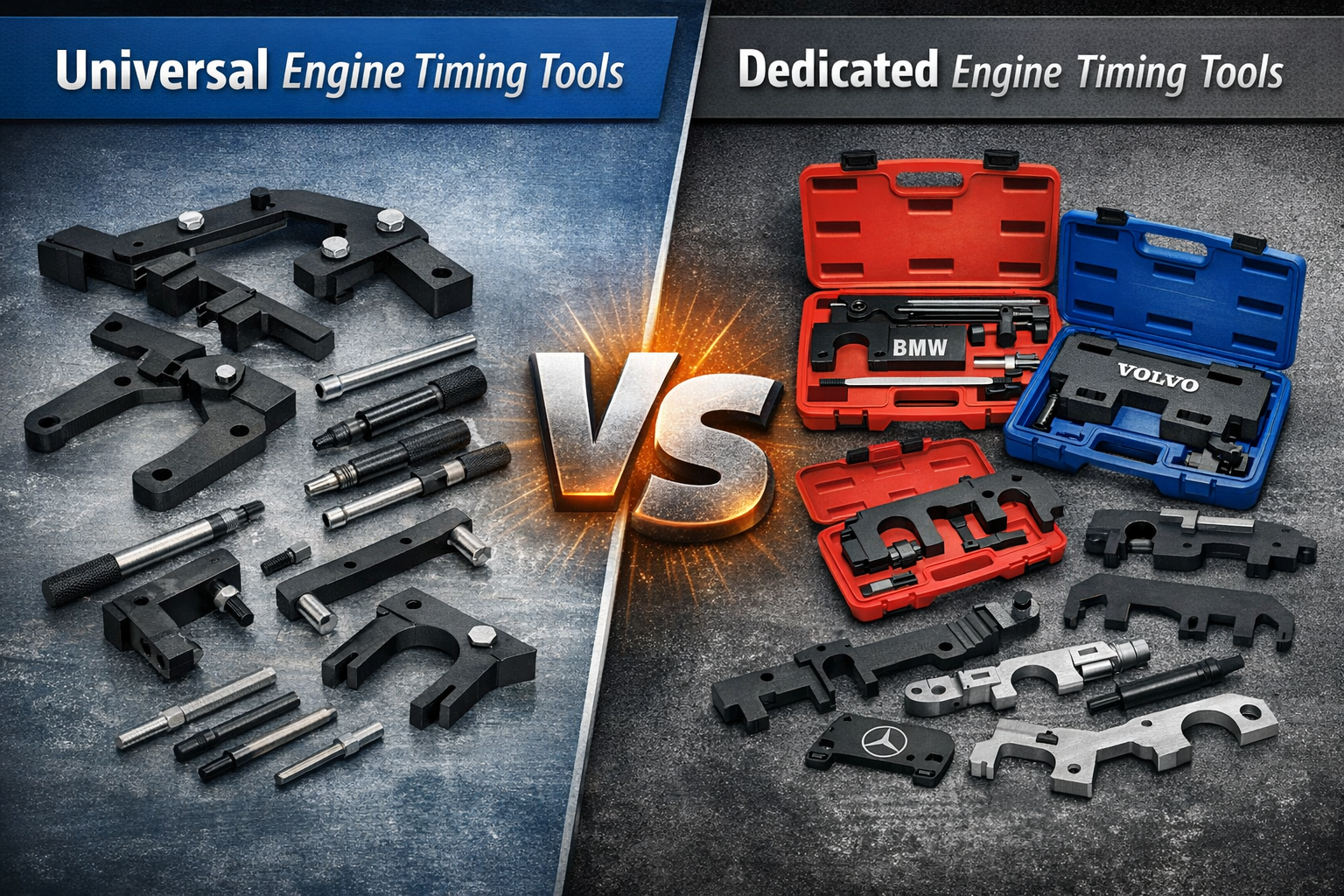
Universal engine timing tools are designed to fit multiple engines and vehicle brands. They usually feature adjustable components that can be adapted to different camshaft and crankshaft positions.
Advantages:
-
Works with many vehicles
-
Lower purchase cost
-
Flexible for general repair tasks
Disadvantages:
-
Lower precision on specific engines
-
Longer setup time
-
Higher risk of misalignment if not used properly
Universal timing tools are suitable for general workshops that handle a wide range of vehicles.
Dedicated Engine Timing Tools
Dedicated engine timing tools are engine-specific or brand-specific, designed to match exact engine structures.
Advantages:
-
High accuracy and perfect fit
-
Faster installation
-
Reduced risk of timing errors
-
Preferred by professional technicians
Disadvantages:
-
Higher cost per tool set
-
Limited to specific engines
Dedicated tools are widely used in professional workshops, dealerships, and heavy-duty repair environments.
Key Differences
| Feature | Universal Tools | Dedicated Tools |
|---|---|---|
| Compatibility | Multiple engines | Specific engines |
| Accuracy | Medium | High |
| Setup Time | Longer | Short |
| Risk Level | Higher | Lower |
Which Should You Choose?
-
Universal tools are suitable if you repair many vehicle types and need flexibility at a lower cost.
-
Dedicated tools are the better choice if accuracy, safety, and efficiency are your priorities.
For most professional workshops and distributors, dedicated engine timing tools offer better long-term value.
Post time: Feb-04-2026