




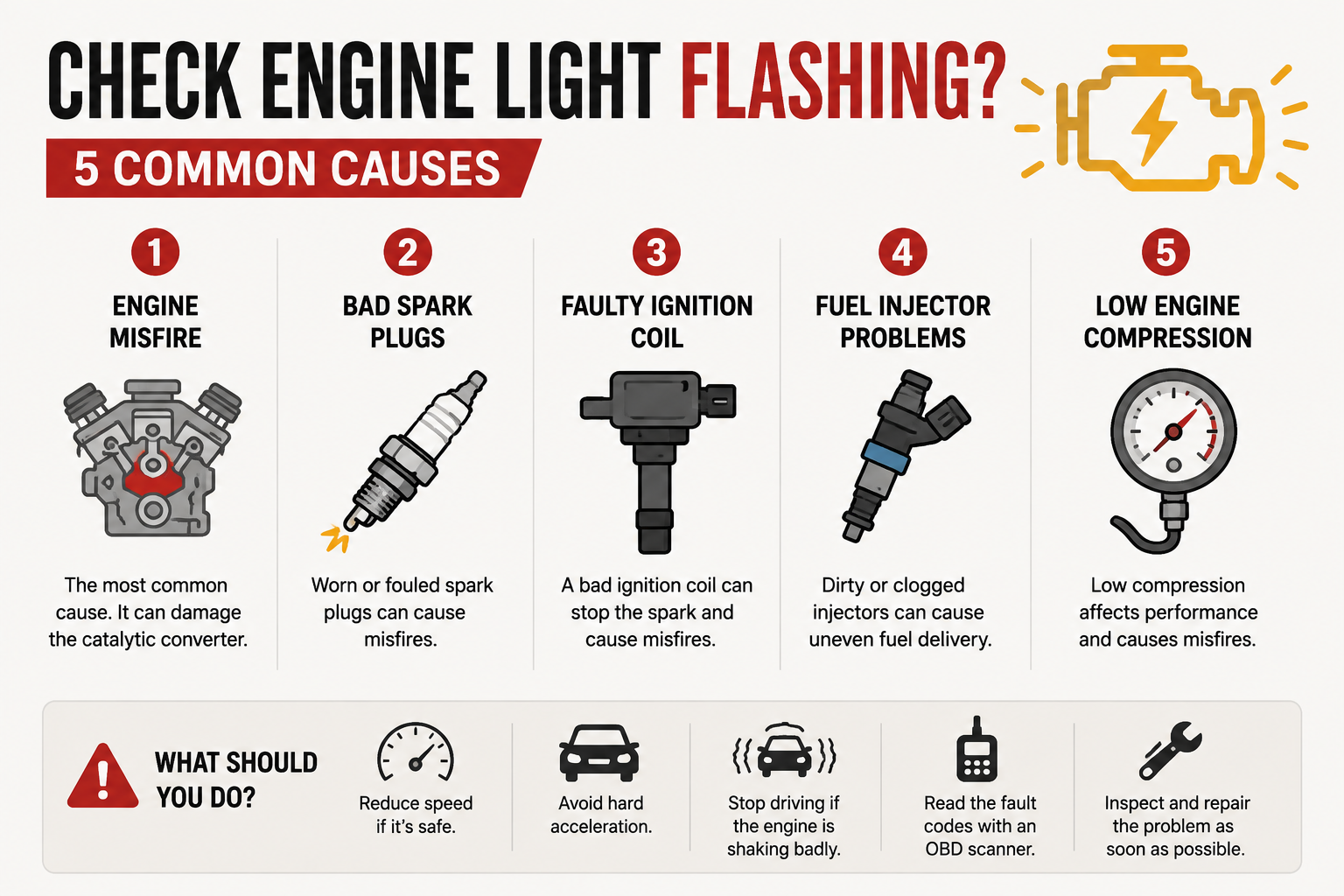
A flashing Check Engine Light is different from a steady one. It usually means the engine has a serious problem that needs attention right away.
In many cases, the cause is an engine misfire. Continuing to drive can damage the catalytic converter and lead to much higher repair costs.
Here’s what a flashing Check Engine Light could mean and what you should do next.
1. Engine Misfire
A misfire is the most common reason for a flashing Check Engine Light.
When one or more cylinders fail to burn fuel correctly, unburned fuel can enter the exhaust system and overheat the catalytic converter.
Common causes include:
- Worn spark plugs
- Bad ignition coils
- Faulty fuel injectors
- Low engine compression
2. Ignition System Problems
A weak spark can prevent the engine from running smoothly.
Check the condition of the spark plugs and ignition coils, especially if the engine feels rough or shakes while driving.
3. Fuel System Issues
If a fuel injector becomes clogged or fails, one cylinder may receive too much or too little fuel.
This can lead to poor combustion and trigger a flashing warning light.
4. Low Engine Compression
Healthy compression is necessary for proper combustion.
Problems such as worn piston rings, leaking valves, or a damaged head gasket can cause a cylinder to lose compression and misfire.
5. Engine Timing Problems
If the timing belt or timing chain slips, the valves and pistons may no longer work together correctly.
Poor engine timing can affect combustion and cause the Check Engine Light to flash.
What Should You Do?
If the Check Engine Light starts flashing:
- Reduce speed if it is safe to do so.
- Avoid hard acceleration.
- Stop driving if the engine is shaking badly.
- Read the fault codes with an OBD scanner.
- Inspect the ignition and fuel systems as soon as possible.
Ignoring the warning can turn a small repair into a much more expensive one.
Can You Keep Driving?
It depends on how the vehicle is running.
If the engine is running roughly, losing power, or shaking, it’s best to stop driving and have the problem diagnosed.
Driving with a flashing Check Engine Light can damage the catalytic converter and increase repair costs.
Final Thoughts
A flashing Check Engine Light should never be ignored.
In most cases, it’s a sign that the engine is misfiring or another problem is affecting combustion.
Finding the cause early can help prevent further damage and get your vehicle back on the road safely.
Post time: Aug-05-2026